
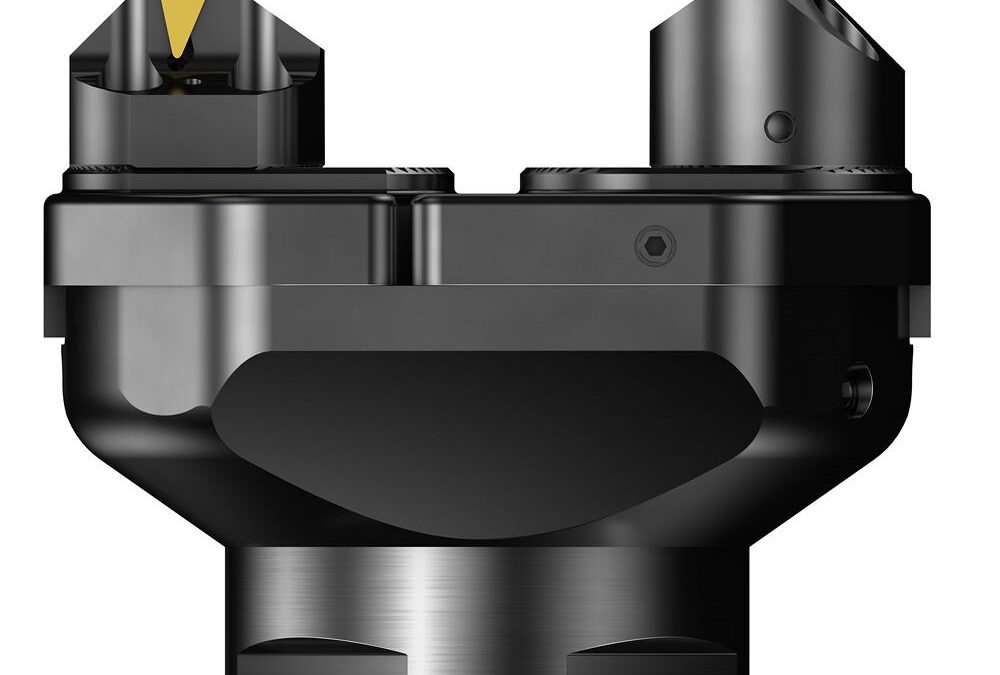
Precision CNC profiling techniques have become a critical manufacturing requirement for the production of dual-radius aerospace seal grooves, which play a decisive role in maintaining pressure integrity, fluid containment, and thermal stability across modern aircraft and propulsion systems. Aerospace seal grooves are engineered to accommodate advanced elastomeric and metal seals that must function reliably under extreme pressure differentials, high rotational speeds, and aggressive thermal cycling. The dual-radius groove geometry is especially complex because it combines two seamlessly blended curvature zones that optimize both sealing compression and dynamic response during operation. Any geometric deviation within these profiles can lead to seal flutter, uneven compression loading, accelerated wear, and catastrophic leakage under flight conditions. Conventional machining methods lack the positional control and contour fidelity required to maintain the continuous curve accuracy demanded by these designs. Precision CNC profiling enables manufacturers to reproduce these multi-radius geometries with micron-level repeatability across large production volumes. As aerospace systems evolve toward higher performance thresholds, tighter tolerances, lighter materials, and longer service intervals, the accuracy of dual-radius seal groove profiling has become a foundational contributor to flight safety, fuel efficiency, and long-term system reliability.
The technical challenge of machining dual-radius seal grooves lies in maintaining continuous curvature integrity while managing constantly changing tool engagement conditions. Dual-radius geometries require the cutting tool to transition smoothly between different curvature profiles without inducing steps, chatter marks, or localized overcut that could compromise seal seating behavior. CNC profiling strategies rely on ultra-high-resolution interpolation algorithms that precisely coordinate tool motion across multiple axes while maintaining stable cutting engagement. Advanced toolpath strategies regulate feed rate, radial engagement, and tool orientation dynamically as the cutter transitions through each radius segment. This prevents sudden spikes in cutting force that could introduce tool deflection or surface tearing on hardened aerospace alloys such as Inconel, titanium, and precipitation-hardened stainless steels. These materials provide exceptional strength and heat resistance but are notoriously difficult to machine due to their low thermal conductivity and high work-hardening tendencies. Through-spindle coolant delivery systems evacuate heat and chips from the cutting zone while maintaining consistent thermal equilibrium across the groove surface. Multi-layer coated carbide and polycrystalline cutting tools preserve edge stability under extreme stress, allowing flawless radius transitions without degradation of surface finish. This level of precision ensures that the dual-radius seal groove fully conforms to the engineered sealing profile throughout its entire circumference.
Dimensional stability and surface integrity are the defining quality attributes in precision CNC profiling for aerospace seal grooves because seal performance is directly governed by microscopic contact behavior between the seal and the groove wall. Any surface waviness, micro-ripple, or localized distortion can create leakage paths, stress concentrations, or friction instability that degrade seal performance under pressure and thermal variation. CNC profiling systems designed for aerospace seal grooves utilize ultra-rigid machine frames, thermally stabilized spindle assemblies, hydrostatic guideways, and high-resolution linear encoders that virtually eliminate mechanical backlash and vibration. Climate-controlled machining environments prevent ambient temperature fluctuations from introducing dimensional drift across extended machining cycles. In-process probing and laser-based metrology enable continuous verification of groove depth, radius transition accuracy, and concentricity without interrupting the cutting cycle. Real-time compensation software automatically adjusts tool offsets to counteract wear progression and thermal expansion, preserving uniform geometry across thousands of identical components. The result is an exceptionally stable manufacturing process that consistently delivers aerospace-grade surface finishes and perfectly blended dual-radius profiles that satisfy the most demanding sealing performance standards.
From a production efficiency and scalability perspective, precision CNC profiling for dual-radius aerospace seal grooves directly influences manufacturing throughput, process yield, and long-term cost control across high-value aerospace programs. Manual profiling methods or conventional form-tool approaches suffer from inconsistent geometry, slow cycle times, and high scrap rates that are incompatible with modern aerospace production requirements. CNC profiling consolidates roughing and finishing operations into continuous multi-axis toolpaths that significantly shorten cycle times while improving profile fidelity. High-rigidity workholding systems ensure that thin-walled engine casings, valve bodies, and hydraulic housings remain perfectly stable under dynamic cutting loads, eliminating micro-shift that could distort groove geometry. Predictive tool life analytics based on spindle load, vibration harmonics, and cutting torque trends prevent unexpected tool failure and reduce unplanned downtime. Automated pallet changers and robotic handling further increase spindle utilization rates, enabling continuous production across multiple shifts with minimal human intervention. This combination of high-precision automation and intelligent process control allows aerospace manufacturers to scale production while maintaining strict dimensional conformity, traceability compliance, and repeatable quality across large production batches.
The functional impact of precision CNC profiling on the performance of dual-radius aerospace seal grooves extends directly into real-world flight safety, pressure system reliability, and energy efficiency. Aerospace seals operate in environments where pressure spikes, rapid temperature variation, vibration, and centrifugal forces are constant. Dual-radius groove geometries are engineered to distribute sealing loads uniformly while allowing controlled elastic deformation of the seal material during dynamic operation. If the groove profile deviates from its intended geometry by even a few microns, the seal may experience localized over-compression or under-compression, leading to fluid leakage, accelerated wear, or sudden failure during operation. In aircraft hydraulic systems, fuel delivery systems, environmental control units, and propulsion assemblies, seal integrity governs pressure stability, thermal management, and overall system efficiency. Precision CNC profiling ensures that every groove maintains exact profile conformity from part to part, enabling predictable seal behavior under all operating conditions. This level of consistency not only protects the mechanical integrity of critical aerospace systems but also reduces maintenance frequency, extends component service life, and supports the stringent reliability expectations imposed by global aviation standards.
Looking toward the future, precision CNC profiling techniques for dual-radius aerospace seal grooves are being rapidly advanced by artificial intelligence, digital twin technology, and hybrid manufacturing approaches that integrate additive and subtractive processes. AI-driven machining platforms analyze live data from cutting forces, acoustic emissions, vibration spectra, and thermal drift to continuously self-optimize profiling parameters at the micro-scale. Digital twins allow engineers to simulate tool engagement, heat distribution, and material response across complex dual-radius geometries before physical machining begins, reducing setup time and eliminating costly trial iterations. Additive manufacturing is increasingly used to create near-net-shape aerospace components with integrated sealing features, with CNC profiling serving as the final precision-defining operation that ensures perfect groove geometry and surface integrity. Advanced surface engineering methods, including micro-texturing and hybrid laser finishing, are also being integrated to further enhance seal friction behavior and longevity. As aerospace technologies evolve toward higher pressures, lighter structures, and more efficient propulsion systems, precision CNC profiling of dual-radius seal grooves will remain one of the most strategically important manufacturing processes supporting the next generation of safe, efficient, and high-performance flight systems.