
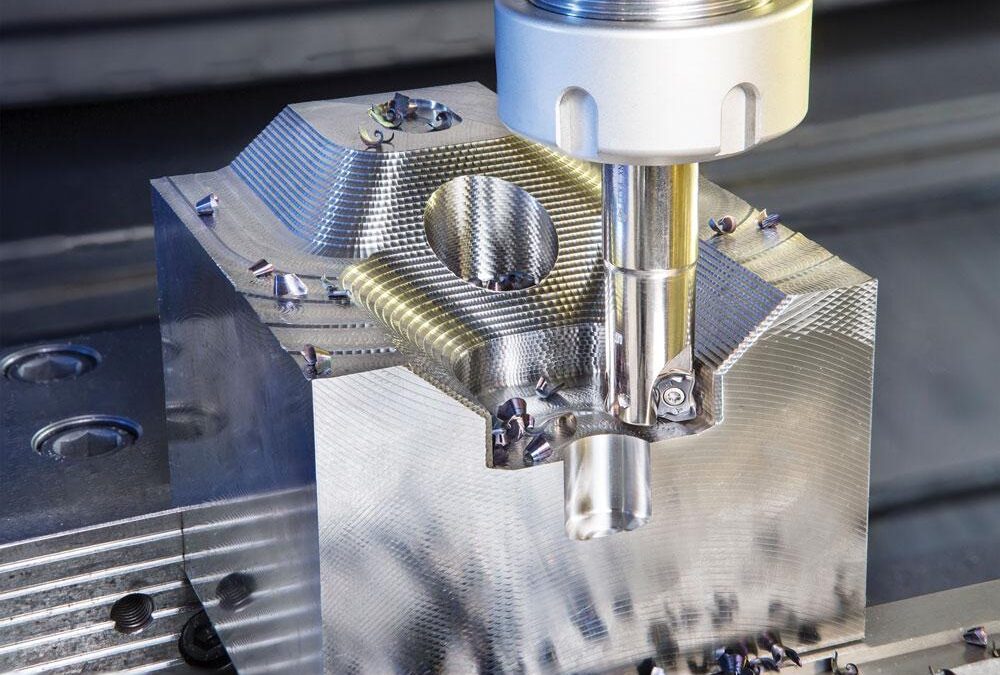
CNC helical interpolation methods have become one of the most critical machining strategies for producing high-precision fuel nozzle bores used in aerospace engines, automotive fuel injection systems, industrial combustion equipment, and advanced energy applications. Fuel nozzles operate under extreme pressure, temperature, and flow regulation requirements where even the smallest geometric deviation inside a bore can disrupt fuel atomization, combustion efficiency, and emission control. Unlike conventional straight drilling, helical interpolation allows a cutting tool to follow a circular path while simultaneously feeding axially, creating a bore with exceptional roundness, surface finish uniformity, and positional accuracy. This method also offers superior control over bore diameter, taper, and concentricity compared to traditional drilling or reaming. As global industries push for higher efficiency, lower emissions, and stricter regulatory compliance, the demand for ultra-precise fuel delivery components continues to rise. CNC helical interpolation has therefore evolved into a foundational manufacturing process that enables consistent production of extremely accurate fuel nozzle bores across both prototyping and high-volume production environments.
The core technical advantage of CNC helical interpolation for fuel nozzle bores lies in its ability to precisely control cutting forces while maintaining exceptional geometric accuracy. In helical interpolation, the cutting tool engages the material gradually along a circular orbit instead of plunging directly into the workpiece, significantly reducing axial load and minimizing tool deflection. This is especially critical when working with hardened stainless steels, nickel-based superalloys, and heat-resistant alloys commonly used in fuel system components. These materials exhibit high strength and low thermal conductivity, making them prone to work hardening and excessive heat buildup during conventional drilling. Helical interpolation distributes heat more evenly while allowing continuous chip evacuation through the spiral cutting path. Advanced CNC controllers synchronize X, Y, and Z-axis movement with spindle rotation at extremely high resolution, ensuring that bore diameter and circularity remain within micron-level tolerances throughout the entire depth. Adaptive feed control further refines the process by dynamically adjusting cutting parameters in response to real-time spindle load, preventing chatter, tool overload, and surface tearing. This level of precision is essential for maintaining consistent fuel flow characteristics and pressure stability within high-performance nozzle assemblies.
Surface integrity and dimensional stability are paramount in CNC helical interpolation for high-precision fuel nozzle bores because internal surface conditions directly influence fuel atomization behavior and long-term component durability. Any surface waviness, micro-burring, or thermal distortion inside the bore can disrupt laminar flow, create turbulence patterns, and accelerate erosion under high-velocity fuel injection. To achieve optimal surface quality, modern CNC helical interpolation systems rely on ultra-rigid machine structures, thermally stabilized spindles, high-resolution linear encoders, and vibration-dampened guideways that eliminate unwanted motion during cutting. Through-tool coolant delivery systems ensure that heat is efficiently removed from the cutting zone while flushing chips away from the bore wall to prevent re-cutting. In-process probing and laser-based measurement technologies verify bore diameter, straightness, and concentricity in real time, allowing automatic tool offset compensation during the machining cycle. Climate-controlled machining environments further stabilize dimensional accuracy by preventing thermal drift across long production runs. This closed-loop control architecture guarantees that every fuel nozzle bore achieves consistent internal geometry and surface quality that meets the stringent performance requirements of high-pressure fuel delivery systems.
From a process efficiency and production scalability standpoint, CNC helical interpolation provides manufacturers with a powerful advantage in balancing high throughput with ultra-tight tolerances. Traditional drilling followed by reaming often requires multiple tool changes, additional finishing passes, and secondary corrective operations to achieve acceptable bore quality. Helical interpolation consolidates roughing and finishing into a single continuous motion that reduces cycle time while improving dimensional control. Multi-axis CNC machines equipped with high-speed spindles and rigid workholding fixtures enable simultaneous machining of multiple bores with identical geometry, significantly increasing output without sacrificing quality. Predictive tool life management systems analyze cutting load, vibration signatures, and thermal patterns to forecast optimal tool replacement intervals, eliminating unexpected tool failure and unplanned downtime. Automated pallet handling and robotic part loading further enhance machining efficiency, allowing uninterrupted production across extended shifts. By stabilizing the helical interpolation process and minimizing quality variation, manufacturers can achieve higher yield rates, lower scrap levels, and more predictable production costs, all of which are critical in high-volume fuel system manufacturing environments.
The accuracy of CNC helical interpolation directly influences the functional performance of fuel nozzles in real-world operating conditions, making it a mission-critical process rather than a simple machining operation. Fuel nozzle bores must maintain absolute consistency in diameter, roundness, and alignment to ensure uniform fuel distribution across multiple injection points. Any geometric imbalance can lead to uneven combustion, localized overheating, increased emissions, and premature component failure. In aerospace engines, where fuel delivery precision directly affects thrust efficiency and safety margins, the tolerances achieved through CNC helical interpolation can determine overall engine reliability. In automotive fuel systems, precise bore geometry supports optimal atomization at increasingly higher injection pressures required by modern direct-injection technologies. Industrial burners and turbines rely on consistent nozzle bore geometry to stabilize flame patterns and maximize combustion efficiency. As operating pressures and performance requirements continue to increase across these industries, the dimensional accuracy delivered by advanced helical interpolation methods becomes an irreplaceable manufacturing capability.
Looking toward the future, CNC helical interpolation methods for high-precision fuel nozzle bores are being rapidly transformed by artificial intelligence, digital twin simulation, and next-generation sensor integration. AI-driven machining platforms are now capable of analyzing real-time data from spindle torque, vibration frequencies, acoustic emissions, and thermal variations to continuously self-optimize toolpaths and cutting parameters at the micron scale. Digital twins enable engineers to simulate bore geometry, tool engagement, heat distribution, and material behavior before physical machining begins, dramatically reducing setup time and eliminating costly trial runs. Hybrid machining systems that combine laser pre-conditioning with mechanical helical interpolation are also emerging, reducing cutting forces and extending tool life in ultra-hard materials. Additive manufacturing is enabling near-net-shape production of complex fuel nozzle bodies, with CNC helical interpolation serving as the final precision-defining operation that guarantees internal flow accuracy. As stricter emissions standards, higher fuel injection pressures, and more compact engine architectures shape the future of combustion technology, CNC helical interpolation will remain one of the most strategically important machining methods governing performance, efficiency, and reliability across the global fuel systems industry.